Contents
GUEST EDITORIAL
Courage and kindness: leadership for the times we are in
Colleen Galasso
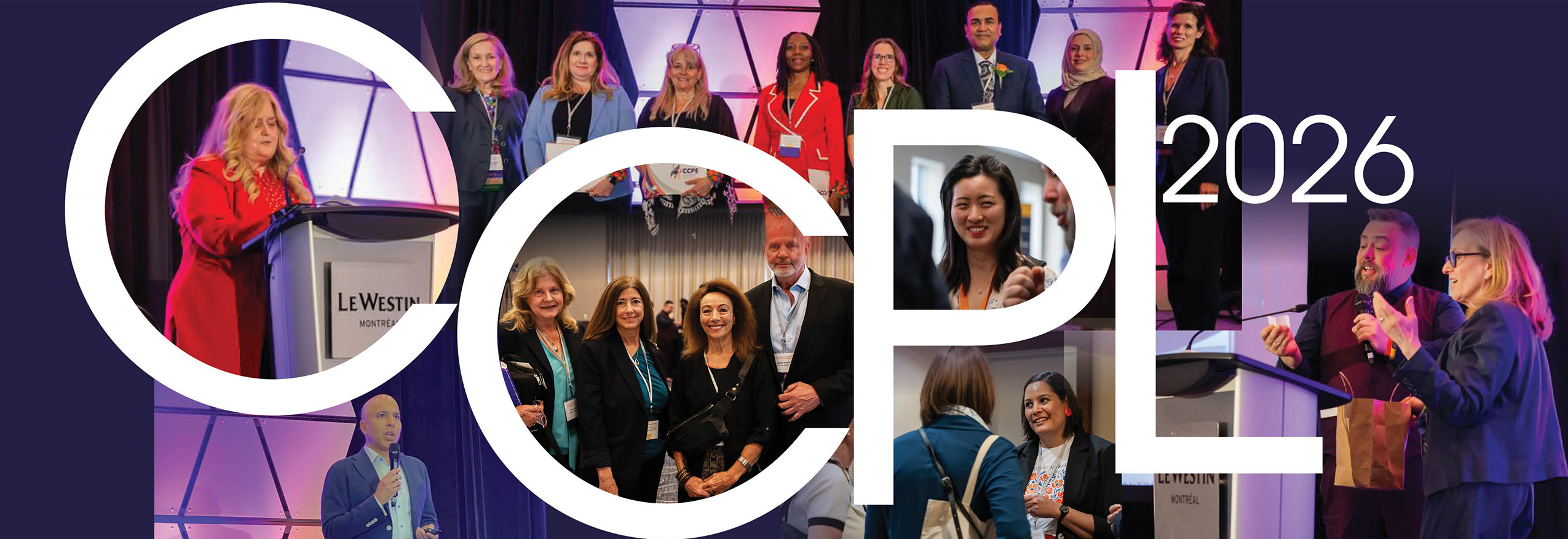
As a member of the team that helped plan and deliver the 2026 Canadian Conference on Physician Leadership, I am delighted to have the opportunity to reflect on the insights, conversations, and learning that emerged throughout the event in this issue’s editorial.

CCPL2026: CONFERENCE PROCEEDINGS
People-centred leadership: four acts of kindness that create better work
Giuseppe Guaiana, MD, PhD
In his keynote talk focused on physician leadership and organizational culture, Dr. Stephen Swensen presented a compelling argument for “people-centred kind leadership” as a foundational strategy for improving health care systems, staff well-being, and patient outcomes. Drawing from research, international examples, and personal anecdotes, the talk emphasized that kindness, agency, belonging, and positive organizational culture are not superficial ideals, but evidence-based determinants of organizational effectiveness and human flourishing.
CCPL2026: CONFERENCE PROCEEDINGS
The leadership test: six questions that transform people and organizations
Giuseppe Guaiana, MD, PhD
In his keynote address on leadership and organizational culture, leadership educator Drew Dudley challenged conventional assumptions about leadership and argued that it should be understood less as formal authority or status and more as consistent everyday behaviour rooted in values, courage, and interpersonal impact. Dudley suggested that many highly accomplished professionals fail to recognize themselves as leaders because society traditionally presents leadership through examples of extraordinary public figures rather than ordinary individuals whose actions positively influence others.
CSPL COACHES
CCPL2026: CONFERENCE PROCEEDINGS
The innovation blueprint
Giuseppe Guaiana, MD, PhD
In her keynote address, Dr. Chika Stacy Oriuwa explored the relations among innovation, leadership, neuroscience, and human connection, arguing that meaningful innovation begins not with technology itself, but with the ability to recognize “invisible strings” connecting ideas, people, and possibilities. Blending personal storytelling, neuroscience, poetry, psychiatry, and leadership theory, Oriuwa presented what she described as an “innovation blueprint” for cultivating curiosity, creativity, critical thinking, compassion, and psychological safety within health care organizations.
CCPL2026: CONFERENCE PROCEEDINGS
Leadership in a warming world: the courage to act on planetary health
Giuseppe Guaiana, MD, PhD
In his keynote address on planetary health and physician leadership, colorectal surgeon Dr. Husein Moloo argued that health care leaders can no longer separate human health from environmental sustainability. Moloo framed planetary health as both an ethical responsibility and a practical leadership challenge, emphasizing that health care organizations must recognize the ecological determinants of health alongside the social determinants traditionally emphasized in medicine.
CSPL COACHES
CCPL2026: CONFERENCE PROCEEDINGS
Panel session – Averting disaster: before “disruptive” becomes the destination
Giuseppe Guaiana, MD, PhD
A panel discussion at the Canadian Conference on Physician Leadership examined the growing problem of physicians being labeled “disruptive” within Canadian health care organizations and explored how leadership cultures, organizational structures, and physician wellness intersect in these situations. The discussion brought together physician leaders, wellness experts, and a former medical regulator to consider how health care systems can better support physicians who advocate change while avoiding punitive or stigmatizing responses.
CCPL2026: CONFERENCE PROCEEDINGS
Concurrent workshops
Colleen Galasso
The 2026 Canadian Conference on Physician Leadership featured 24 interactive 90-minute workshops offered at various levels: introductory, intermediate, and suitable for all participants. Please note that the descriptions have been condensed for the purposes of the journal. To view full, detailed descriptions, see the conference website: Program – Day 1,
Program – Day 2
CCPL2026: CONFERENCE PROCEEDINGS
2026 Chris Carruthers Excellence in Medical Leadership Award
Dr. Nicole Boutilier
CCPL2026: CONFERENCE PROCEEDINGS
2025-26 CCPE recipients
CCPL2026: CONFERENCE PROCEEDINGS
Conference images

HEALTH ECONOMICS
Same but different: new options that are not significantly different can be cost-effective
Jeffrey S. Hoch, PhD, Carolyn S. Dewa, MPH, PhD
In this eighth article in the health economics series, we explore the idea that a new treatment can be cost-effective but not significantly different from usual care in terms of costs or outcomes. This situation occurs because a cost-effectiveness analysis considers costs and outcomes simultaneously. In addition, researchers often employ a different statistical approach, using a Bayesian instead of frequentist framework. We provide an example illustrating a new option with non-statistically significant differences in both cost and health outcome with a high probability of cost-effectiveness.
CSPL COACHES
COACHING CORNER
What coaching sounds like in practice
Jane Graydon, MBA, MCC, Ellen Tsai, MD, MHSc (Bioethics)
Coaching Corner is a collaboration between the Canadian Physician Coaches Network and the Canadian Society of Physician Leaders to highlight the value of coaching for physician leaders, including how they may effectively use coaching skills in their own interactions. This second article in the series illustrates what coaching looks like in practice. Using a fictional dialogue, our coach supports the physician leader in moving from overwhelm toward clarity, prioritization, and intentional action. The conversation highlights several defining features of coaching: beginning with the leader’s agenda, using reflective questions rather than advice, distinguishing operational problems from deeper leadership challenges, and concluding with self generated commitments.
VISUAL REFLECTIONS
Jaswant Guzder, MD, FRCP
Dr. Guzder is a professor (admin) of psychiatry at the University of British Columbia (UBC), co-director of UBC’s Social and Cultural Psychiatry Program, and adjunct professor in the psychology department at the University of Victoria. Although retired from McGill University, she continues teaching in the divisions of Child Psychiatry and Social and Cultural Psychiatry there. She also practises family therapy and psychoanalysis in both Victoria and Montréal.
CSPL COACHES
BOOK REVIEW
The Outrage Cure: How overcoming anger and betrayal can transform the way we live, connect and heal
Alika Lafontaine, MD, HarperCollins, 2026
Reviewed by Johny Van Aerde, MD, PhD
The world around us is shouting and fighting; our view is distorted by polarizing filters. The realities of patients struggling, providers burning out, and communities left behind are deeply personal and profoundly human problems that cause anger and outrage. Those two emotions are quite different, according to Dr. Alika Lafontaine. In his book, The Outrage Cure, he shares deeply personal examples to help us understand where these emotions come from and how they can be avoided or reversed.
CSPL COACHES