CCPL2026: CONFERENCE PROCEEDINGS
Concurrent workshops

Colleen Galasso
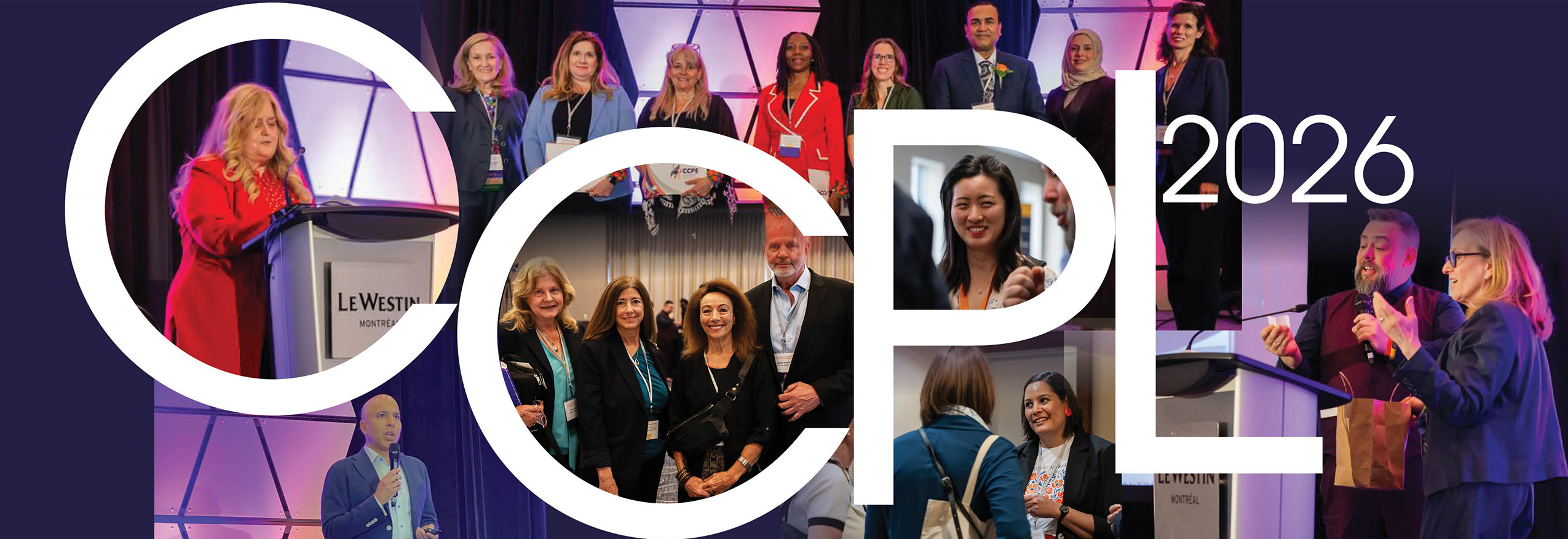
The 2026 Canadian Conference on Physician Leadership featured 24 interactive 90-minute workshops offered at various levels: introductory, intermediate, and suitable for all participants. A summary of these workshops follows. Please note that the descriptions have been condensed for the purposes of the journal. To view full, detailed descriptions, see the conference website: Program – Day 1, Program – Day 2
Rooted in trust: values, character, and belonging
Lyn K. Sonnenberg, MSc, MD, MEd, FRCPC, EMBA; Victor Do, MD, FRCPC, MSc; Jerry Maniate, MD, MEd, EMBA, FRCPC, FACP, CCPE, CPC(HC)
Trust is a foundational element of effective and equitable health systems leadership; yet, it is often assumed rather than intentionally cultivated. This interactive workshop explored how trust, mistrust, and distrust shape learning environments, team dynamics, and systemic equity by examining their relation to organizational culture and identifying pathways to accountability through character-aligned leadership. Using practical frameworks such as the Trust Triangle, mutually accountable spaces, psychological safety, and Brené Brown’s “rumble” concept, participants analyzed real-world cases involving admissions, assessment, and belonging, and explored strategies for co-creating and evaluating trust and belonging initiatives focused on equity and well-being.
Turning tension into triumph: leveraging conflict as opportunity
Kevin Wasko, MA, MD, CCFP(EM), CCPE; Constance LeBlanc, MD, CCFP(EM), MAEd, MBA, CCIP
Conflict in the workplace is often viewed negatively; yet, it can be an opportunity for growth when addressed through collaboration and kindness. This workshop explored the importance of addressing conflict early and its impact on both health care worker well-being and patient care. Using evidence-based approaches, such as the Thomas-Kilmann model and the LeBlanc-Wasko approach, participants examined strategies to manage conflict constructively. Through case examples and “improv prototyping,” they practised responding to real-life conflict situations and identified approaches to strengthening teams and improving quality of care.
Beyond blame: cultivating compassion in the face of medico-legal challenges
Keleigh James, MMEd, MD, CCFP, FCFP; Catherine Pound, MSc, MPH, MD, FRCPC; Katherine Baldwin, MD, FRCPC, ACC
Medico-legal complaints, adverse events, and legal proceedings can trigger shame, fear, and isolation for physicians — feelings that impair judgement, strain relationships, and contribute to burnout. This workshop, led by physicians from the Canadian Medical Protective Association, explored how compassion and self-compassion can support physicians in understanding and navigating these experiences. Through evidence-informed teaching, reflection, and discussion, participants examined compassion as a core competency that strengthens psychological safety and supports sound clinical and leadership decision-making, while building skills to respond to medico-legal distress with greater awareness, resilience, and supportive leadership.
Improvising change: building courage and kindness in the unscripted world
Roetka Gradstein, MD, MA; Laura MacLellan, BA, CPHR, CPCC
This highly interactive workshop used theatre-based improvisation to help physician leaders strengthen presence, adaptability, and empathy in fast-paced clinical environments. In guided improv exercises, participants practised responding to verbal and emotional cues, embracing uncertainty, and valuing others’ contributions in unscripted scenarios — skills essential for leadership in complex health care systems. A debrief explored how improv principles, such as authentic response, shared problem-solving, and comfort with imperfection, can enhance psychological safety, team connection, and leadership effectiveness. Participants developed practical strategies to apply improv-informed approaches in their leadership practice.
Indoor air quality and health: an urgent call for action
Diane de Camps Meschino, BSc(Hon), MD, FRCPC; Ming-Ka Chan, MD, MHPE, FRCPC; Tasleem Nimjee, MD, MBA, CCFP (EM), CFPC, MSc
Indoor air quality (IAQ) is a critical yet often overlooked determinant of health, as people spend up to 90% of their time indoors. This workshop built leadership capacity to address IAQ challenges in health care by integrating planetary health and equity into decision-making, strengthening collaboration and communication skills, and enhancing preparedness for changes in climate and air quality. Participants explored how poor indoor air quality impacts health — particularly for vulnerable populations — and examined evidence-informed, equity-focused strategies to improve communication, empower patients and families, and co-create solutions that strengthen system resilience.
Elevating women in medicine: advancing equity and leadership for women physicians
Jasmine Gandhi, MD, FRCPC; Krista Hind; Kailey Richards; Camille Munro, MD, CCFP (PC); Susan Peddle, MD, FRCPC
This interactive workshop supported health care leaders in advancing women physicians by addressing systemic barriers and promoting inclusive leadership practices. Drawing on The Ottawa Hospital’s Women Physician Leadership Committee guide, participants explored strategies to strengthen leadership identity, implement equitable policies, and build supportive organizational cultures. They examined approaches, such as flexible work arrangements, mentorship and sponsorship, allyship training, inclusive recruitment, and compensation practices. Participants identified barriers to advancement, considered the role of supportive policies in career sustainability and developed strategies to foster mentorship, sponsorship, and inclusive leadership.
Reclaiming the narrative: using social media to rebuild trust
Shazma Mithani, MD, FRCPC
In an era where misinformation spreads rapidly, health care leaders have a responsibility to serve as trusted voices online. This interactive workshop provided practical guidance on building a credible social media presence, creating evidence-based content, and navigating digital spaces with confidence and professionalism. Participants explored how health care messaging influences public trust, identified characteristics of credible online content, and applied strategies to engage online communities while maintaining professionalism and resilience in the face of misinformation.
Healing conversations in health care: a CMPA workshop on disclosure and apology
Heather Murray, MD, MSc, FRCPC; Evelyn Constantin, MD
Recent estimates indicate that 1 in 17 patient admissions to Canadian hospitals involves at least one adverse event, with significant impacts on patients, families, and care teams. This workshop provided practical medico-legal guidance grounded in Canadian apology legislation, along with case examples and opportunities for practice. Participants explored how to conduct disclosure conversations with confidence and compassion, explained the protections offered through apology legislation, applied a structured framework to patient safety and medical error scenarios, and practised effective disclosure skills with patients and families.
When helping hurts: reframing supportive leadership
Curtis Johnston, MD, FRCPC, CCPE; Nadia Salvaterra, MD, CCFP, CCPE
In the pursuit of compassionate leadership, physician leaders may unintentionally “help” in ways that hinder growth, autonomy, and resilience in their teams. This workshop explored how well-intentioned behaviours — such as rescuing others, avoiding difficult conversations, or over-functioning — can erode trust, limit learning, and undermine psychological safety. Drawing on the LEADS in a Caring Environment framework, participants examined leadership habits that may disempower teams and developed strategies to strengthen coaching, delegation, and boundary-setting with clarity, kindness, and courage. They identified behaviours that limit team autonomy, reflected on personal leadership assumptions, and integrated inclusive practices that support equity, diversity, inclusion, accessibility, and psychological safety across teams.
Leading digital wellness with compassion: empower teams, ease the tech burden
Chandi Chandrasena, MD, CCFP, FCFP; Emily Wu, BSc
We talk a lot about digital transformation, but less about how it feels to work in systems that can be more demanding than supportive. Digital overload is a growing contributor to clinician burnout and compassion fatigue. This workshop introduced the five Bs of digital wellness — bucket filling, building capacity, breaks, boundaries, and balance — as a practical framework to help leaders identify pain points, reduce administrative burden, and foster healthier digital environments. Participants explored challenges in their own settings and developed practical strategies to improve both efficiency and well-being, while identifying how digital environments contribute to burnout and proposing compassionate leadership approaches to strengthen connection in digital practice.
Patient flow: tackling the challenging issues
Warren Ma, MD, MBA, FRCPC; Kirstie McLelland, MD, FRCPC
This interactive workshop explored how the Edmonton Zone Integrated Operations Centre applied Michael Porter’s Value-Based Healthcare framework to achieve measurable system improvements, including reduced EMS offload times, fewer red alert events, and significant cost avoidance without compromising patient safety. Participants examined how courageous and kind leadership enables real-time system redesign while fostering trust, collaboration, and psychological safety across teams. They explored practical tools, such as the STEP framework and shared dashboards, and considered how these approaches could be adapted to improve flow, value, and system-wide coordination in their own health care systems.
Courageous and kind mentorship: building leadership capacity across the career continuum
Henry Annan, MD, MPP, FRCPC; Victor Do, MD, FRCPC, MSc
Redefining leadership through courage and kindness begins with how we show up for one another, and mentorship is a key expression of physician leadership. This workshop explored mentorship as a practice of courageous and kind leadership, focusing on how mentoring relationships can empower, challenge, and support individuals across career stages. Participants examined strategies for navigating challenges, such as power dynamics and emotional labour, and developed practical tools to build and sustain meaningful mentorship relationships. They identified key attributes of effective mentorship, developed strategies for selecting mentors or mentees aligned with their goals, and demonstrated behaviours that foster inclusive, psychologically safe, and values-driven mentorship cultures.
Listening to the next generation: learners leading planetary health QI in health care
Emma McDermott, MD, BSc, MGA, MD, PGY3; Casey Cohen, BSc, PhD, MDCM candidate
Environmental sustainability is increasingly recognized as a core component of physician leadership, with direct links to population health, health care delivery, and professional ethics. This learner-led workshop explored strategies to reduce health care’s environmental footprint and strengthen intergenerational collaboration to support sustainable system change. Participants reviewed examples of planetary health quality improvement (QI) projects and discussed practical approaches to embedding sustainability into clinical and operational settings. They examined opportunities to design learner-led QI initiatives, engage trainees in sustainability efforts, and apply evaluation methods to support ongoing improvement and lasting institutional change.
Civility and kindness: foundations of a healthy medical culture
Mamta Gautam, MD, MBA, FRCPC, CCPE, CPE
Civility and kindness are increasingly recognized as essential dimensions of effective medical leadership, reflecting respectful conduct under pressure and leadership grounded in empathy, inclusion, and integrity. This workshop explored how kindness-based leadership can strengthen psychological safety, workforce retention, equity-oriented care, and organizational resilience by embedding respect and compassion as core competencies. Through case discussion and reflection, participants examined how civility and kindness support courageous leadership and team effectiveness. They defined these constructs, considered their relation to psychological safety and system priorities, and applied evidence-informed strategies to foster cultures of respect, inclusion, and compassion in health care settings.
From quality improvement to strategic leadership: embedding physician quality leaders
Marshall Cheng, MD; Dave Williams, MD; Erica Phelps, MD, FRCSC; Rebecca Adams, MD; Angela Tecson, BScN
Health-system transformation requires leadership grounded in clinical insight, data, and collaboration. The Fraser Health Authority’s Physician Quality Leader (PQL) program develops physicians from QI trainees into embedded system leaders who drive quality, innovation, and redesign across the organization. Integrated within governance structures, PQLs co-lead initiatives in patient safety, accreditation, and system improvement, strengthening engagement and continuous learning. This workshop examined the structure, impact, and adaptability of the PQL model. Participants explored how physicians transition into system leaders, identified enabling governance and funding structures, and considered how the model can strengthen leadership, collaboration, and safety culture.
LEADing for well-being: applying the LEADS framework and the Okanagan Charter to support high-performing teams
Constance LeBlanc, MD, CCFP(EM), MAEd, MBA, CCIP; Victor Do, MD, FRCPC, MSc
Physician well-being is a leadership imperative, with direct links to patient outcomes, safety, and system performance; yet, it requires intentional, values-based leadership to be sustained. This interactive workshop framed well-being as a core leadership competency grounded in the LEADS in a Caring Environment framework and the Okanagan Charter, emphasizing the interconnected well-being of individuals, teams, and organizations. Participants explored how leadership behaviours influence well-being, identified actions that support or undermine it, and applied the TRIZ method to surface unhelpful patterns. They developed practical strategies to strengthen physician and team well-being and committed to implementing well-being-promoting leadership actions in their own settings.
Beyond process: the human side of system change
Scott McLeod, MD, MPH, MPA, CCFP, FCFP, CCPE; Dawn Hartfield, MD, MPH
Organizational change is one of the most complex challenges facing senior health system leaders. This workshop explored a three-year transformation addressing a substantial backlog of complaints, highlighting how coordinated leadership, workflow redesign, and transparency support sustained improvement in public trust and patient safety. It emphasized that systems change is fundamentally human change, requiring psychological safety, relational leadership, and shared accountability. Participants examined interpersonal dynamics and courageous conversations that enable transformation, explored strategies to foster continuous improvement alongside civility and wellness, and identified tools and approaches to address barriers and co-design solutions to complex organizational challenges.
Transforming health care through proximity-based leadership
Marc Bilodeau, MD; Nicole Boucher-Larrivière, MSc
This workshop examined the impact of courageous and kind leadership through the Proximity-Based Health Management Model implemented by the Centre intégré de santé et des services sociaux de l’Outaouais. In response to workforce shortages, fragmented partnerships, and access challenges, leaders adopted shared governance, community engagement, and decision-making closer to the point of care. The model demonstrates how proximity-based leadership can strengthen trust, improve care pathways, and foster belonging among health professionals and community partners. Participants explored how courageous and kind leadership addresses system challenges, designed strategies to support psychological safety and inclusion, applied shared governance principles to strengthen workforce sustainability and patient-centred care, and considered the impact of collaboration on outcomes and organizational culture.
Exercising moral courage: physician leaders as stewards of values
Anurag Saxena, MD, MEd, MBA, FRCP, FCAP, CHE, CCPE; Linda Snell, MD, MHPE, FRCPC, MACP
Physician leaders play a pivotal role in shaping health care and medical education, with far-reaching impacts. This interactive workshop explored moral courage — the willingness to act on moral convictions despite fear of consequences — and how leaders can bridge the gap between knowing and doing. Participants examined how to voice their values, strengthen ethical decision-making, and lead responsibly in both calm and crisis situations. They defined moral courage, considered its challenges and impact in decision-making, and identified strategies to strengthen their capacity to act with moral courage in leadership practice.
Code Physician HR: harvesting the real-world outcomes of mentorship for physician leaders
Andrea Lum, MD, FRCPC, CCPE, FCAR; Kelly McShane, PhD, CPsych
Mentorship is a critical yet underdeveloped component of physician leadership. This workshop introduced Code Physician HR, a mentorship model designed to provide “just-in-time” support for leaders navigating complex human resource challenges. Participants explored how structured mentorship strengthens leadership capability, supports professional growth, and contributes to healthier organizational cultures through real-world case discussions and practical coaching. They described the core components of a physician-specific mentorship program, examined key mentor competencies, and applied evidence-informed mentorship models to enhance leadership development in clinical and academic settings.
Brain-based psychological safety leadership
Callie Bland, BSc, BSN, CPCC
Psychological safety is a key predictor of high-performing, innovative teams. This workshop introduced a brain-based approach that extends beyond behavioural definitions to include non-conscious drivers of trust and team dynamics. Participants explored how leaders’ own psychological safety affects performance and learned strategies to prevent and recover from psychological harm. They described key drivers of psychological safety, identified strategies to support their own well-being and recognized how the S.A.F.E.T.Y.™ model can enhance team culture and collaboration.
Seeing clearly in a BANI world: cultivating courage and kindness through awareness
Roetka Gradstein, MD, MA; Laura MacLellan, BA, CPHR, CPCC
In a health care environment defined by brittleness, anxiety, nonlinearity, and incomprehensibility (BANI), leaders are called upon to lead with clarity, courage, and kindness. This workshop introduced Presence-Based Leadership and the Three Panes of Awareness (context, soma, and identity) as tools for shifting from reactive patterns to intentional leadership. Participants explored how awareness supports steadiness in uncertainty and strengthens connection in complex systems. They identified how BANI influences leadership behaviours, applied the Three Panes of Awareness to manage reactive responses and practised using tools to build clarity, purpose, and psychological safety within their teams.
Leading with courage and compassion: a dialogue on physician suicide in the context of the Canadian health care environment
Catherine Pound, MSc, MPH, MD, FRCPC; Gino Somers, BMedSci, MBBS, PhD, FRCPA
This interactive session explored physician suicide through the lens of courageous and compassionate leadership, drawing on evidence from Canada and the United States, including the 2025 National Physician Health Survey and the CMPA Physician Well-Being Index. It highlighted key risk and protective factors, the impact of medico-legal stressors, and available prevention, intervention, and postvention resources such as 9-8-8 and the AMA STEPS Forward Toolkit. Participants reflected on how leadership can foster psychologically safe, resilient medical cultures and examined strategies to mitigate distress while supporting physician well-being.
Schwartz Rounds for medical leaders: courageous conversations that cultivate kindness and connection
Tracey Receveur, BScN
Medical leadership requires composure and decisiveness, while also calling for authenticity, empathy, and connection. This interactive workshop adapted the Schwartz Rounds framework for medical leaders, providing a structured space to share stories of vulnerability, ethical tension, and courage. Participants explored how compassionate storytelling and reflective dialogue can strengthen trust, psychological safety, and connection within leadership teams. They described the purpose and evidence base of Schwartz Rounds, experienced how reflective dialogue fosters connection, recognized trauma-informed facilitation approaches, and explored practical steps to implement Schwartz Rounds in their own organizations.
Author
Colleen Galasso is executive director of the Canadian Society of Physician Leaders.
Correspondence to:
colleen@physicianleaders.ca